Pest Control Service in Knoxville provides targeted exterior barrier defense, biological pest disruption, and structural exclusion for property owners throughout Knox County. Initial residential property assessments determine specific insect entry channels along foundation vents, crawlspaces, and roof junctions without unnecessary broad-spectrum saturation.
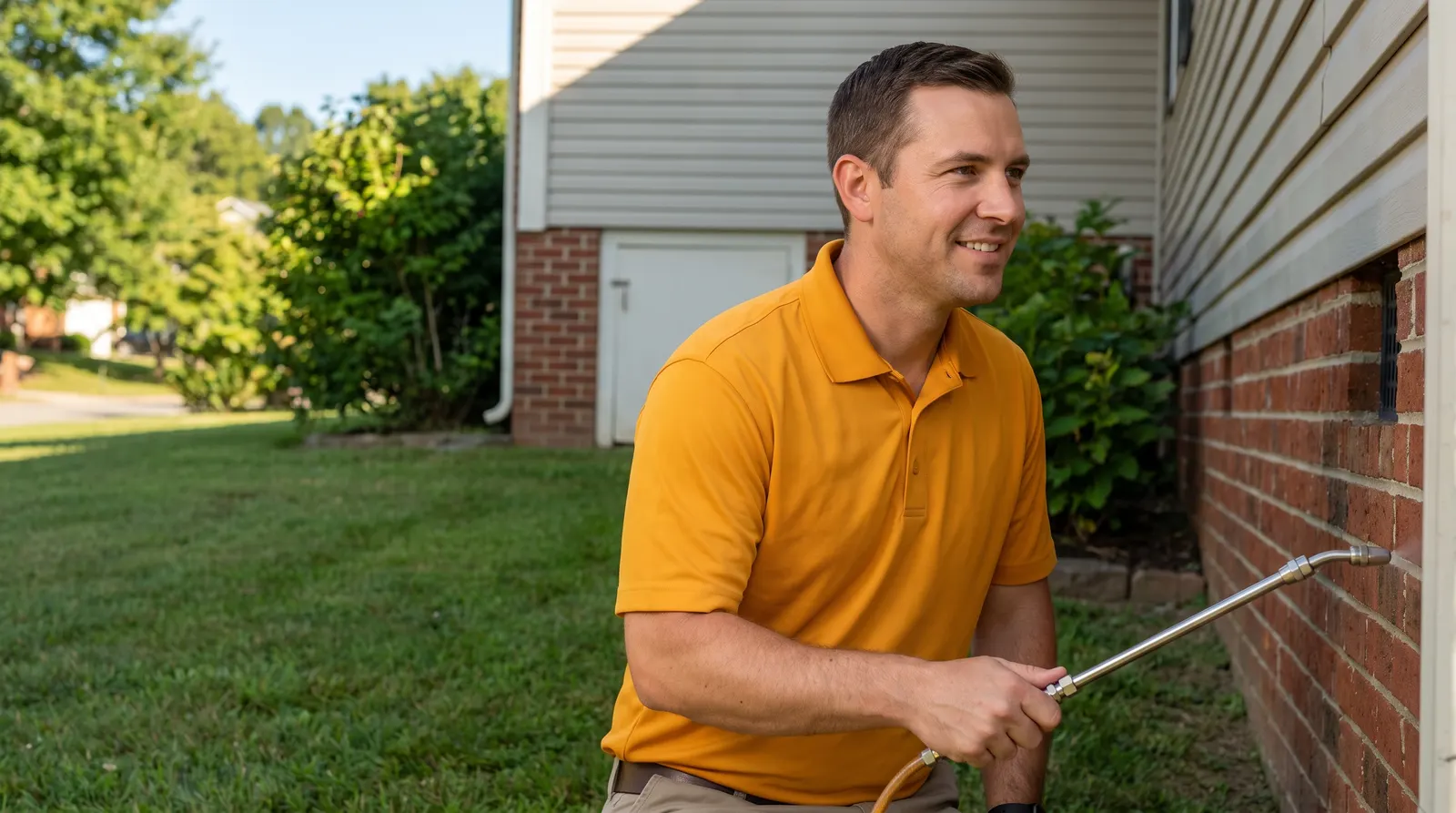
Pest Control Service in Knoxville is a specialized structural inspection, biological barrier application, and targeted exclusion process designed to eliminate wood-destroying insects, seasonal pests, and rodents from residential and commercial structures throughout Knox County.
Every service reflects the same meticulous attention to detail, whether it's a single job or a larger pest control service project across Knoxville.
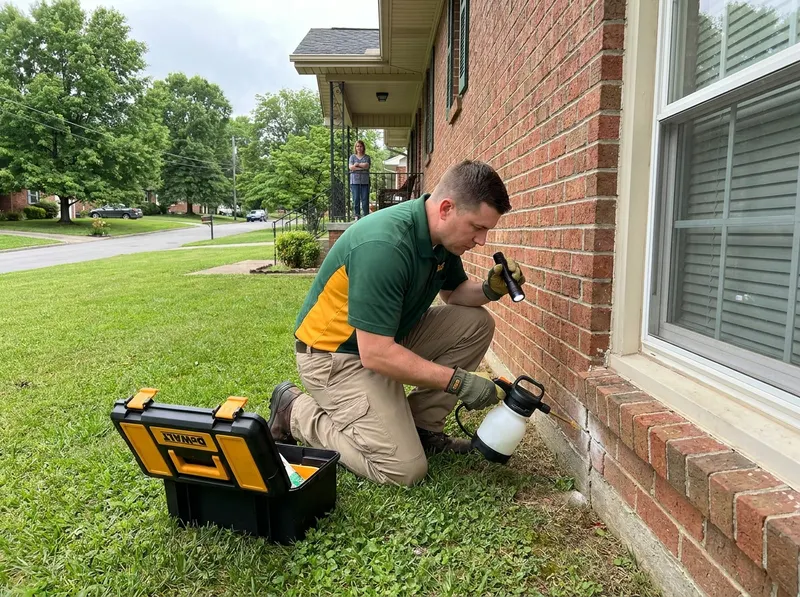
Quarterly and bi-monthly perimeter treatments establish a continuous chemical and physical shield around foundation walls, weep holes, and exterior utility penetrations. Formulations target common household intruders including odorous house ants, smokybrown cockroaches, silverfish, and ground beetles without broad-spectrum indoor saturation. Technicians begin with a comprehensive perimeter inspection of the foundation footprint, identifying structural gaps along crawlspace vents, brick weep openings, and sill plates. Exterior barrier applications use micro-encapsulated suspensions that bond securely to masonry, poured concrete, and untreated wood, preventing wash-off from seasonal East Tennessee precipitation. Granular perimeter treatments are distributed across landscape mulch beds extending five to ten feet away from the foundation line to intercept foraging colonies before they approach the primary building envelope. Indoor applications remain strictly targeted to interior plumbing chases, unfinished basement voids, and subfloor access portals only when interior trailing is actively verified, eliminating non-target pesticide exposure in residential living spaces.
Get a quote →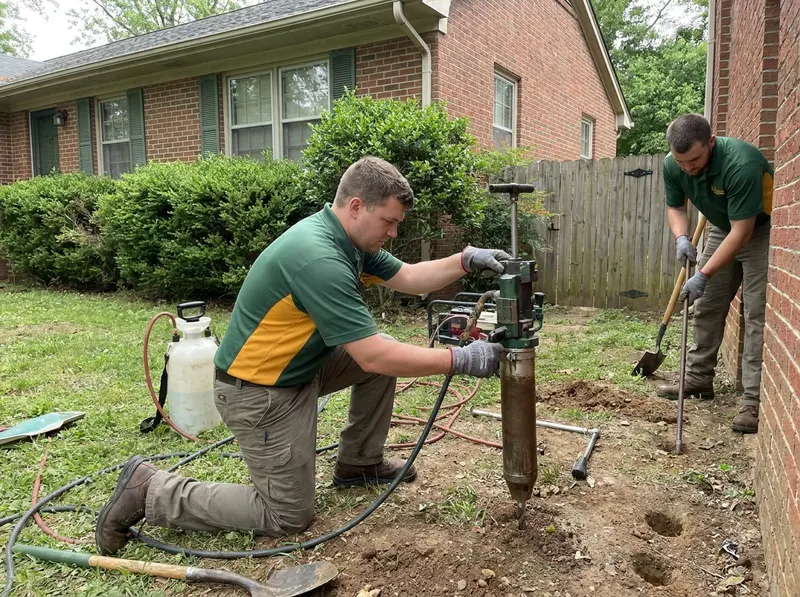
Liquid trench-and-rod termiticide applications and continuous bait monitoring systems address Eastern subterranean termites nesting in native clay soil. Technicians inspect mud tubes along crawlspace piers and foundation sill plates to deliver targeted non-repellent soil barriers that eradicate entire colonies. Comprehensive structural evaluations measure total linear foundation footage, identifying critical high-risk junctions such as soil-to-wood contact points, patio slab joints, and exterior HVAC conduit entries. Liquid termiticide trenches are excavated four to six inches deep directly adjacent to foundation walls, followed by pressure injection of non-repellent active ingredients like fipronil into the dense red clay subsoil. Termites passing through the treated zone do not detect the chemistry, resulting in lethal transfer through mutual grooming and food sharing back to the subterranean reproductive queen. For homes with complex slab configurations, sub-slab drilling through expansion joints injects termiticide directly beneath load-bearing partitions, establishing an unbroken horizontal chemical barrier across the entire structural base.
Get a quote →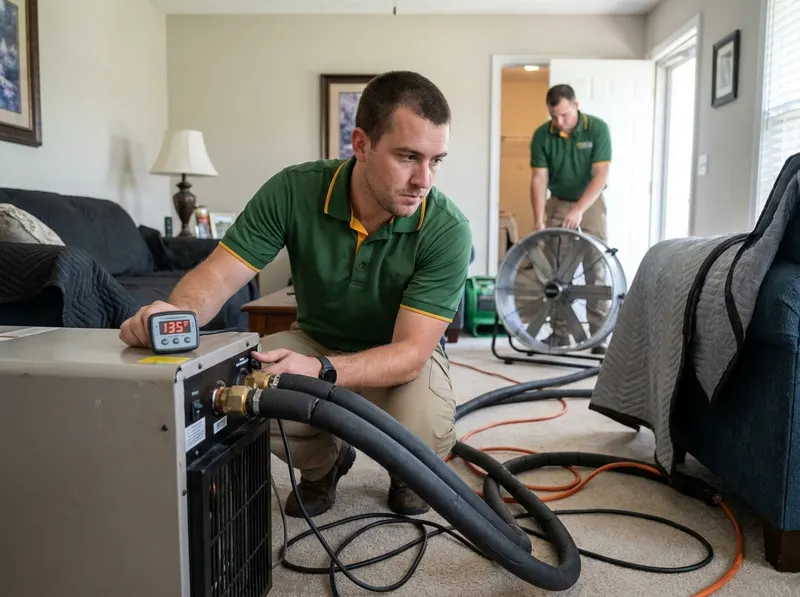
Whole-structure high-output convective heat units elevate ambient indoor temperatures to a lethal threshold of 122°F to 135°F for sustained exposure periods. This process penetrates mattresses, box springs, wall framing, and textile fibers to eliminate all life stages including eggs, nymphs, and adults in a single treatment cycle. Commercial electric and indirect-fired mobile thermal generators channel heated airflow through high-velocity industrial axial fans, establishing uniform thermal circulation across interior dead-air pockets, wall voids, and deep mattress cores. Calibrated thermal imaging sensors continuously track temperature levels across structural baseboards, electrical outlet boxes, and acoustic ceiling assemblies to guarantee every square inch reaches the critical thermal death point for at least two consecutive hours. Unlike repeated liquid contact insecticides that fail to reach deeply hidden dormant eggs, convective thermal energy forces complete cellular dehydration and protein coagulation throughout all instars without leaving behind chemical residues on furniture or bedding fabrics.
Get a quote →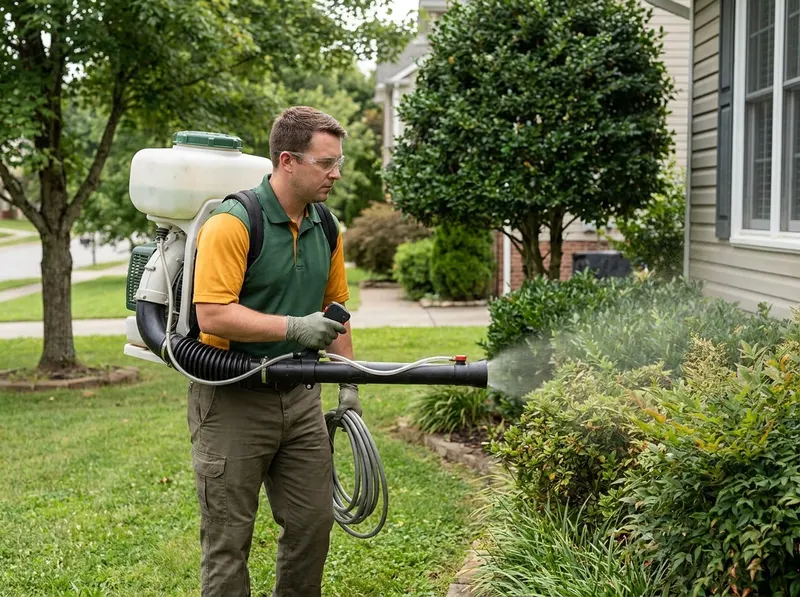
Micro-misting applications apply residual insect growth regulators and targeted adulticides to the underside of broadleaf foliage, shaded ornamental landscaping, and property boundary perimeters. Treatments disrupt the reproductive cycle of Asian tiger mosquitoes near river drainage basins and residential yards from May through September. Technicians utilize backpack dynamic-droplet misters to distribute micro-droplet suspensions underneath the canopy of broadleaf deciduous trees, boxwoods, English ivy groundcover, and dense shrubbery where adult females harbor during peak daytime heat. Formulations incorporate biological insect growth regulators like pyriproxyfen alongside micro-encapsulated adulticides, arresting larval emergence within ambient moisture pockets while eliminating adult populations on contact. Regular inspection protocols identify and neutralize cryptic standing water reservoirs such as clogged downspout leaders, decorative saucers, corrugated pipe extensions, and unlevel deck supports, ensuring that mosquito larval reproduction is halted directly at the breeding source.
Get a quote →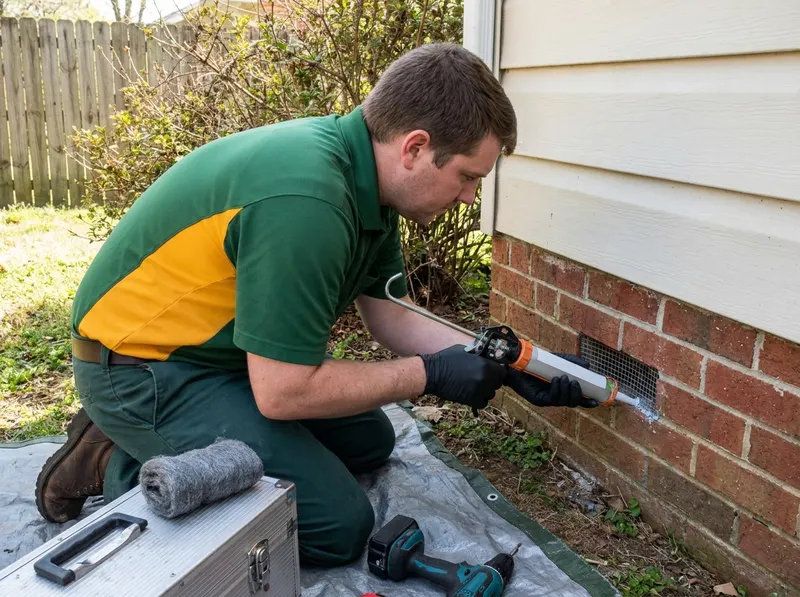
Crawlspace and attic inspection identifies gnaw marks, droppings, and entry voids larger than one-quarter inch. Technicians seal structural gaps using heavy-gauge galvanized hardware cloth, copper mesh, and elastomeric sealants, backed by interior mechanical traps to clear existing house mice or Norway rats without outdoor secondary poisoning risks. Detailed structural assessments trace exterior travel routes along tree limbs touching rooflines, low foundation vents, and subterranean pipe penetrations through brick skirting. Exclusion crews install custom-cut quarter-inch galvanized steel wire mesh across foundation crawlspace access wells, crawlspace flood vents, and roof fascia gaps, sealing outer borders with high-density polyurethane expanding foam infused with pest-resistant particulate compounds. Interior mechanical containment deploys tamper-resistant spring traps and snap stations systematically positioned along monitored runway perimeters within attic crawlspaces and subfloor cavities, rapidly eliminating active interior populations without utilizing rodenticides that cause carcass decay behind interior drywall.
Get a quote →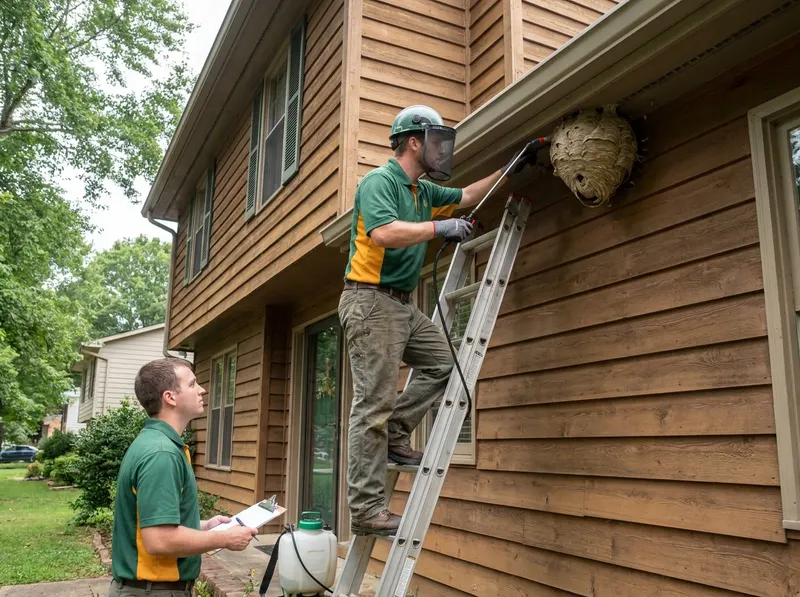
Direct mechanical removal and aerosol contact applications eradicate aerial paper wasp nests, bald-faced hornet hives, and yellowjacket ground colonies beneath eaves, porch ceilings, and architectural overhangs. Preventative residual repellent dusting prevents seasonal re-nesting along soffit lines. Technicians use high-reach extension equipment and pressurized specialized dusters to inject residual pyrethroid dust into subterranean yellowjacket burrows, exterior window framing cracks, and masonry weep voids before mechanical removal begins. Aerial carton nests built by bald-faced hornets and European hornets receive rapid-knockdown freezing formulations to neutralize defensive guard insects immediately, preventing defensive swarming near residential walkways and entries. Post-removal treatments include the clinical cleansing of structural substrate anchor points with enzymatic neutralizing sprays to break down lingering orientation pheromones that attract scouting queens during subsequent nesting windows.
Get a quote →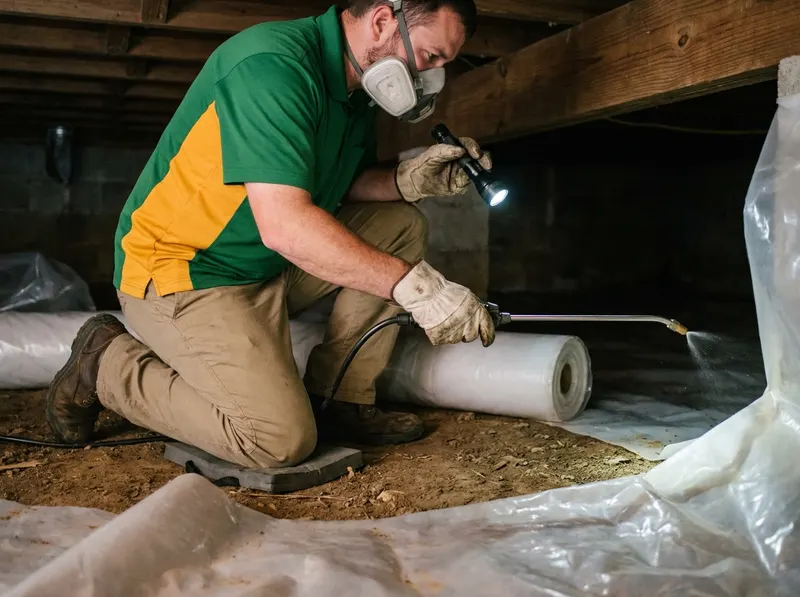
High relative humidity in unconditioned dirt crawlspaces creates an ideal environment for wood-boring powderpost beetles, fungus gnats, and subterranean termites. Installation of heavy 10-mil to 20-mil reinforced vapor retarders coupled with borate wood treatments seals exposed framing against timber moisture decay. The remediation protocol begins by removing contaminated surface debris, discarded construction scraps, and old organic residue that foster active fungal sporulation and insect sustenance. Technicians spray structural subfloors, floor joists, and structural band sills with a deep-penetrating disodium octaborate tetrahydrate formulation, creating an unpalatable, lethal barrier against anobiid powderpost beetle larvae and subterranean wood rot. Ground soil surfaces are fully lined with continuous puncture-resistant reinforced polyethylene vapor membranes, overlapped twelve inches and taped at all seam junctures with industrial butyl adhesives. Masonry piers and foundation perimeter stem walls are sealed securely to isolate the home's primary framing from chronic ground moisture evaporation.
Get a quote →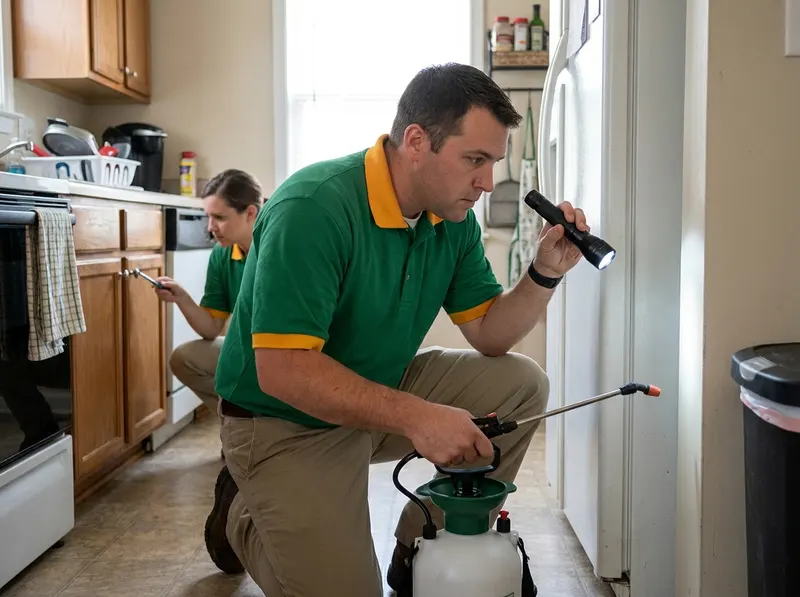
Intensive multi-step baiting protocols eliminate German cockroach populations concentrated in kitchen appliances, motor housings, plumbing chases, and wall voids. Technicians deploy low-toxicity insect growth regulators alongside bait gels that cockroaches ingest and transfer throughout nesting aggregations. The cleanout protocol systematically targets critical micro-harborages behind commercial stainless steel equipment, refrigerator compressor bays, dishwasher back panels, and interior cabinet hinges. High-potency non-repellent abamectin and indoxacarb bait matrixes are applied in precise, pin-head micro-dots inside unexposed structural recesses, keeping active materials away from food preparation counters and domestic animals. Technicians concurrently apply insect growth regulators to interrupt chitin synthesis in developing nymphs, effectively sterilizing reproducing adults and terminating the egg-laying reproduction cycle. Follow-up diagnostic monitoring with sticky pheromone interception boards confirms steady population decline across consecutive two-week cycles until complete population collapse is verified.
Get a quote →You get a firm, itemized quote for your pest control service before any work begins, no surprises, no pressure.
Careful prep, tidy work, and a full cleanup when we are done. We treat your home and belongings like our own.
The same trusted, background-checked team from the first call to the final check.
Selecting the correct intervention plan depends on the pest biology, seasonal pressure, and the physical architecture of the home. If property owners observe active subterranean termite mud tubes or seasonal winged swarmers along interior window sills, they require a dedicated liquid termiticide barrier or sub-surface bait system; routine topical surface sprays will fail to eliminate the subterranean queen. If structural living areas show sporadic intrusions of odorous house ants, smokybrown cockroaches, or paper wasps during humid summer months, a quarterly exterior barrier program stops entry along foundation perimeters without saturating interior drywall.
For acute bed bug infestations within mattresses, baseboards, and furniture, a high-temperature thermal remediation protocol achieves complete single-day life-cycle mortality, whereas standard residual surface contact insecticides require repeated visits and carry higher re-emergence risks. If house mice or roof rats are nesting within crawlspaces or attic insulation, physical structural exclusion using 1/4-inch galvanized steel mesh and sealants provides permanent resolution; relying purely on bait stations leaves entry points unsealed and risks odor from carcasses inside wall cavities. When unconditioned dirt crawlspaces exhibit wood moisture levels exceeding 20 percent alongside active powderpost beetle exit holes, installing a continuous heavy-mil vapor barrier alongside targeted disodium octaborate tetrahydrate timber treatments addresses the root moisture cause rather than temporarily masking fungal decay.
In residential communities bounded by heavy mature timber canopies and ornamental groundcover, selecting targeted seasonal foliage treatments prevents continuous re-invasion of biting diptera, whereas treating strictly hardscapes leaves breeding resting reservoirs untouched. The fundamental trade-off lies between one-time corrective services and scheduled preventative maintenance: single-visit treatments clear existing surface populations at a lower immediate transaction fee, but ongoing perimeter defense shields the structure against reinvasion across shifting seasonal cycles in East Tennessee.
Every project gets a firm, written price after a free on-site visit. Ranges below for orientation.
Tell us about your pest control service job and we'll send a clear, written quote, usually the same day. Or just call and talk to a real Knoxville pro.
(865) 319-8580
Knoxville sits in a humid valley basin defined by the Tennessee River, steep ridge-and-valley topography, and dense clay soils that retain high ground moisture. Historic districts like Fourth and Gill, Old North Knoxville, and Island Home Park contain early 20th-century Craftsman and Victorian homes built over damp dirt crawlspaces and unvented stone foundations. These older timbers frequently draw subterranean termite colonies and wood-destroying beetles out of river bottomlands near the Tennessee Riverfront and Ijams Nature Center. Meanwhile, mid-century ranch properties throughout Bearden, Rocky Hill, and West Hills experience steady pressure from smokybrown cockroaches and field mice navigating mature hardwood canopies and foundation brick weep vents. In newer residential developments across West Knox County along Kingston Pike and Pellissippi Parkway, extensive soil disturbance and limestone grading displace native ground-nesting ants and subterranean yellowjackets toward residential slab perimeters. The high relative humidity of the Tennessee Valley, combined with average annual precipitation exceeding 50 inches, accelerates the biological breakdown of unconditioned crawlspace floor joists while sustaining high ambient mosquito and tick populations from early spring through late autumn across both urban riverfront parcels and shaded suburban acreage.
Free estimates for Knoxville & the surrounding area.
 Norvian Pest Shield