Residential structures in Knoxville encounter unique entomological pressures rooted in the region's humid subtropical climate and dense tree canopies. Properties near the Tennessee Riverfront, Ijams Nature Center, and…
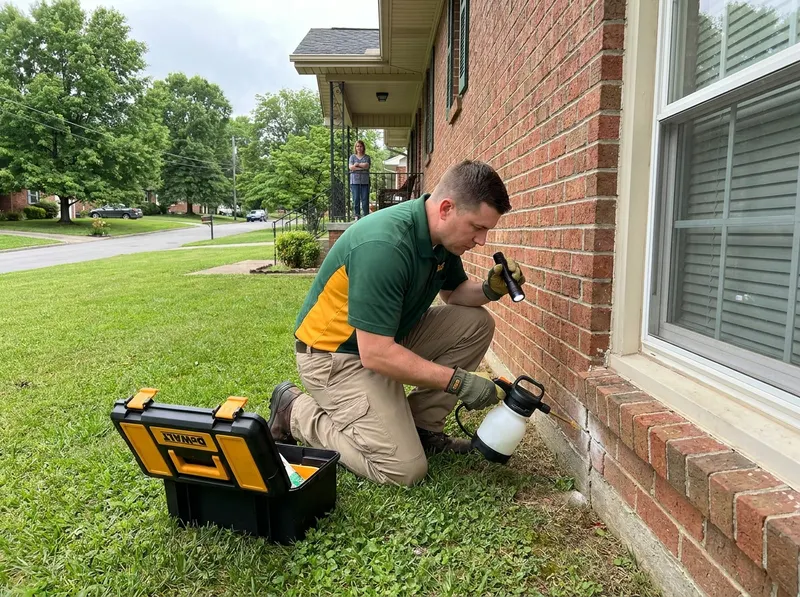
Residential structures in Knoxville encounter unique entomological pressures rooted in the region's humid subtropical climate and dense tree canopies. Properties near the Tennessee Riverfront, Ijams Nature Center, and shaded parcels in Bearden face high relative humidity levels exceeding 70 percent from May through September. These conditions accelerate reproductive lifecycles for Periplaneta americana (American cockroach) and Tapinoma sessile (odorous house ant). In older housing envelopes found throughout Fourth and Gill and Old North Knoxville, stone foundations and historic mortared basements feature micro-fissures that allow outdoor foragers easy transit inside living spaces. Targeted general residential pest control installs a dual-zone defense: a synthetic pyrethroid perimeter barrier extending 3 feet up the exterior foundation and 3 feet out onto the soil surface, paired with micro-injected desiccant dusts inside plumbing penetrations.
Decision-fit requirements vary significantly across Knox County building styles. A crawlspace inspection and soil-edge barrier fit split-level construction in West Hills and Fountain City, where damp ground generates constant silverfish and camel cricket migrations. In contrast, slab-on-grade homes in Rocky Hill and Sequoyah Hills require dedicated focus on expansion joints, weep-hole screens, and attached garage thresholds where rodents infiltrate during autumnal cooling in October. General pest management eliminates multi-species household pressures simultaneously; however, the functional trade-off involves biological specificity. Targeted general treatments do not eradicate active subterranean termite colonies inside structural timbers, nor do they resolve entrenched bed bug populations hidden inside mattresses, which both demand isolated, specialized remediation protocols.
Standard procedure follows an objective 4-step sequence: 1. Exterior foundation inspection and mechanical de-webbing under eaves up to 12 feet. 2. Exterior liquid band application around the complete perimeter and utility entry pipes. 3. Interior crack-and-crevice application behind refrigerators, under sinks, and around sub-floor plumbing rough-ins. 4. Placement of mechanical monitoring stations in dark transition corridors such as basements, crawlspaces, or utility rooms to measure future pest movement objectively without relying on chemical saturation.
Every job gets a firm, written price after a free on-site visit.
Tell us about your general residential pest control job in Knoxville and we'll send a clear, written quote, usually the same day.
 Norvian Pest Shield